
This week: The newsletter is officially old enough to drink! Let’s pour one out for that. This week I dive into Sazerac refusing to not spend money, the India-UK Trade deal got a little problematic with the overseers and some of the top 10 cars in the US might get more expensive. Oh, and Omega brought back the reduced Speedmaster, sorta. It never went away, but now they’ve reconfigured it to look like it’s big bro.
Whisk(e)y
Sazerac Goes Shopping, and India's Regulator Crashes the Party
Quick bit of context before we get into it: India's Scotch tariff finally came down this summer, from 150% to 75% immediately and on a path to 40% over the next decade, under the new UK-India trade deal [1].
India's Food Safety Regulator Moves In on Diageo and Pernod Ricard

Here's where the tariff story from the top gets complicated. Barely a month after that tariff cut took effect, India's Food Safety and Standards Authority (FSSAI) opened a wide-reaching crackdown on exactly the two companies best positioned to benefit from it: Diageo and Pernod Ricard, the dominant foreign players in the Indian spirits market [4][5].
Diageo was hit first. FSSAI barred two of the company's popular whisky brands over allegations of misleading maturity claims and undisclosed artificial flavoring, part of a broader flavoring crackdown that also touched several Indian producers [5]. Days later, inspectors seized roughly 18,000 boxes of Diageo liquor bottles, this time over labeling: the boxes allegedly lacked the required markings showing the plastic was safely recycled [5][6]. Diageo confirmed the seizure, saying the bottles came from an FSSAI-approved recycler and that the required tests had already been conducted by its suppliers, effectively disputing the basis for the hold [5].
Then it was Pernod Ricard's turn. FSSAI inspected the company's Bengaluru plant over two days, collecting samples of Blenders Pride and Royal Stag, two of its flagship Indian whisky brands, and reviewing manufacturing and packaging practices [4][7]. Sources familiar with the visit said inspectors flagged hygiene issues at the plant and problems with recycled-plastic labeling similar to the Diageo case, though as of this writing FSSAI has not issued formal adverse findings against Pernod [4][7]. Pernod confirmed the visit, calling regulatory inspections a normal part of doing business [7].
It's worth noting Pernod was already navigating a rough patch in India before this inspection. The company is contesting a $314 million demand from Indian tax authorities over allegations it undervalued imported Scotch whisky, is party to a separate antitrust matter, and has been shut out of the New Delhi retail market since 2022 after its liquor license was rejected, a rejection it's still appealing [4][8].
None of this necessarily derails the tariff story. A trade agreement lowering the cost of getting Scotch into India and a domestic food safety regulator tightening labeling and formulation standards aren't contradictory; a market about to see a lot more imported volume is exactly where you'd expect regulators to sharpen their scrutiny. But it's a reminder that the tariff cut is the first chapter here, not the whole story. How Diageo and Pernod Ricard navigate compliance in India over the next few months will matter as much to how much Scotch actually reaches Indian shelves as the tariff schedule itself.
Sazerac Buys Garrard County Distilling
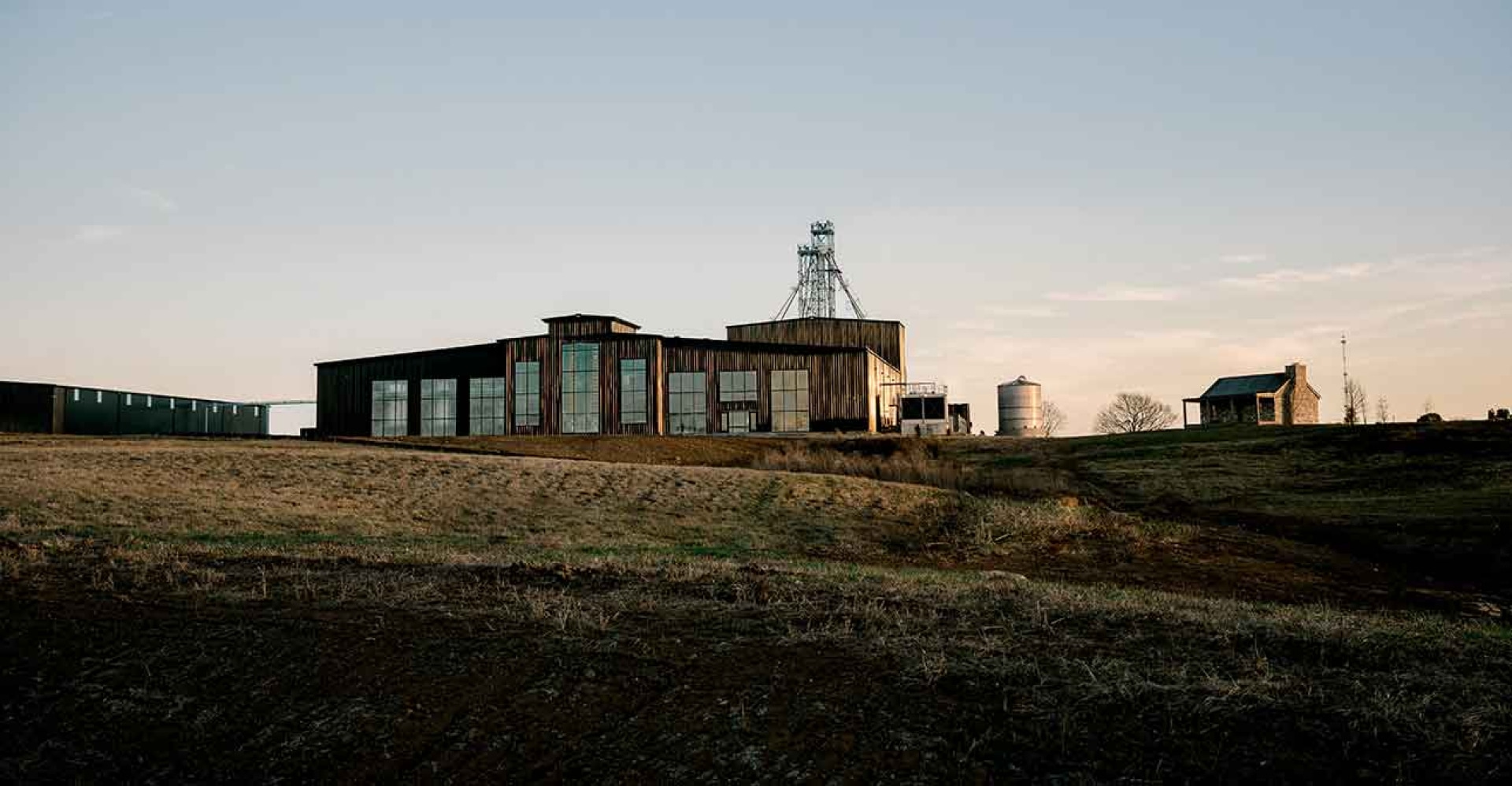
The headline you already caught: Sazerac, the private company behind Buffalo Trace, closed on its purchase of Garrard County Distilling for $20 million at a Kentucky master commissioner's sale [2]. The deal ran through a Sazerac affiliate called Tom Collins Distilling, which was the sole bidder for a property previously appraised north of $27.9 million [2]. Garrard County is one of Kentucky's newer distilleries and has sat idle for more than a year; Sazerac hasn't said what it plans to do with the site, but the purchase extends a Kentucky footprint that already includes Buffalo Trace, Pappy Van Winkle, Weller, Blanton's, Eagle Rare, and Col. E.H. Taylor [2][3]. Now this was after the Brown-Forman deal fell through, twice. So clearly Sazerac is looking to spend money. I’ll take some. I assume they’re going to use the facility for production and storage, kind of like A. Smith Bowan Distillery. Time will tell!
Watches
The Speedmaster Goes Small (and a Lot More Serious)

Omega just gave the Speedmaster 38 the glow-up people have been waiting for, and the timing is not an accident.
Yesterday, Omega unveiled a refreshed Speedmaster 38mm collection: seven new references that pull the "compact" Speedmaster noticeably closer to the Moonwatch it's always lived in the shadow of [9][10]. The case proportions haven't moved much: still 38mm across and a hefty 14.75mm thick, since a chronograph movement is basically a stack of mechanisms and there's no getting around the height that creates [9]. What has changed is the attitude. The bezel is thicker and more assertive, borrowing the Moonwatch's "dot-over-ninety" tachymeter detail, the oval subdials have become perfect circles, and the oval date window has been squared off [9]. The lineup spans black, white, silvery opaline, ivory cappuccino, ice-blue, and mother-of-pearl dials, in combinations of steel, 18K Moonshine Gold, and Sedna Gold, some set with diamonds [9]. All of it sits on a new five-link bracelet styled after the Moonwatch's own [9].
Under the dial, the date models run Omega's Co-Axial Calibre 3330, while the one dateless reference (black dial, steel) uses the Calibre 3332, functionally identical aside from the date complication [9]. Both beat at 4 Hz, hold a 52-hour power reserve, and are COSC-certified chronometers [9]. Worth noting for the spec-obsessed: these are COSC, not METAS Master Chronometer certified, which is a bit of a curiosity on a 2026 Omega release and the clearest technical gap between the 38 and its bigger sibling [9]. Pricing runs from £5,500 for the black dateless steel model up to £11,000 for the mother-of-pearl diamond reference, with the bicolour gold pieces landing around £9,800 [9].
None of this happened in a vacuum. The clearest preview arrived back in October 2025 with the Speedmaster 38mm Milano Cortina 2026, a special edition built to mark 100 days to the Olympic Winter Games, where Omega will serve as official timekeeper for the 32nd time since 1932 [11][12]. That watch paired the 38mm steel case with a blue ceramic bezel, round subdials, and a frosted white dial with a finger-trace pattern lifted from the Milano Cortina "26" emblem, worn on the same five-link bracelet [11][13]. In hindsight, it wasn't just a one-off: it was the template for the whole refresh Omega just launched [11].
A Brief History of the Speedmaster

The Speedmaster wasn't built for space. It was built for the dashboard.
Omega launched the original Speedmaster in 1957 as a motorsport chronograph, part of a trio of tool watches (alongside the Railmaster and Seamaster 300) aimed at professionals who needed accurate timing under real conditions. It was the first chronograph to move the tachymeter scale off the dial and onto the bezel, which is the detail that still defines every Speedmaster made since, including the new 38mm references.
NASA didn't choose the Speedmaster because Omega asked. In 1964, NASA anonymously purchased a handful of chronographs from local shops and ran them through brutal qualification testing: extreme heat and cold, vacuum, humidity, shock, and vibration. The Speedmaster was the only one that survived intact, and in 1965 it was certified "flight qualified for all manned space missions." That certification is why it was on Ed White's wrist during the first American spacewalk later that year.
The watch earned its "Moonwatch" nickname on July 21, 1969, when Buzz Aldrin wore his Speedmaster Professional on the lunar surface during Apollo 11 (Armstrong's stayed in the lunar module as a backup timer). Four years later, on Apollo 13, the crew famously used a Speedmaster to hand-time a critical 14-second engine burn after the onboard computer went offline, which is the story behind Omega's Silver Snoopy Award, still the only formal recognition NASA gives to outside contractors.
The Speedmaster 38, the collection getting refreshed today, is a much newer branch of that family tree. Omega introduced it in 2017 as a scaled-down, automatic take on the Moonwatch, aimed at a broader (and, initially, more female-skewed) audience and nicknamed "Speedmaster Reduced" by fans of the earlier automatic compact models it echoed. For years it stayed visually distinct from the Moonwatch, with softer, oval details. What's happening now, starting with last year's Milano Cortina edition and continuing with today's refresh, is Omega deliberately closing that visual gap, without touching the manual-wind, METAS-certified Moonwatch Professional that still carries the Apollo lineage.
Final Thoughts:
The Speedmaster is the watch for me. It has been a dream watch since I was a kid. All the space books had one in it, and as a space/science nerd, yes I need one. Maybe that’s overrated? But who cares, you know? It is a badass watch. One day I will get one, and I hope it’s sooner rather then later. The new 38mm is a great addition. The Speedy does wear a little big, especially the newer models. The dial proportions are off a little, but It’s not bad. This will sell like hotcakes. I just know it.
Wheels
50% and Rising, Plus GM's Engine Problem Won't Go Away
Trump Threatens to Double the Canadian Auto Tariff
President Trump said the US will raise tariffs on Canadian-built cars, trucks, and auto parts to 50%, effective January 1, 2027 [14][15]. That would double the current 25% top-line rate, which today only applies to the non-US content of a vehicle [15]. Steel imported from Canada already faces a 50% tariff, so the auto move would bring vehicles in line with that [16].
The timing traces back to a trade deal that collapsed last week. The agreement on the table would have actually cut the Canadian auto tariff from 25% down to 15%, and the steel and aluminum tariff from 50% to 25%, but talks fell apart over how the relief would apply to medium and heavy-duty trucks [14]. Trump's Monday post on Truth Social didn't pull punches, accusing Canada of "ripping off the United States of America for years" and declaring the country "will be treated like a State no longer" [17]. Canadian Prime Minister Mark Carney has vowed to retaliate "dollar for dollar" [17].
What's not yet clear is how vehicles compliant with the USMCA trade pact would be treated. Under current rules, USMCA-compliant vehicles are exempt from the 25% tariff, and it's unclear whether that exemption survives a jump to 50% [16]. Given how deeply integrated the US, Canadian, and Mexican auto supply chains are, with parts and partially assembled vehicles crossing the border multiple times before a car is finished, this is being described as one of the most disruptive tariff moves of Trump's second term for the auto industry specifically [16][18]. The White House says Canadian imports of US vehicles are already down 22% amid the standoff, and several automakers have scaled back or paused Canadian production in response to the uncertainty [14].
Auto executives speaking to Reuters were skeptical the January 1 date will hold, noting Trump has announced tariffs before that were later delayed or watered down, and that the date lands conveniently after the November midterms [14].
Every Vehicle Currently Built in Canada
This is the part that matters if you're shopping this year: which specific nameplates would actually be exposed to a 50% tariff. As of today, Ontario is the only province with active passenger-vehicle assembly, and five manufacturers are running plants there [19]:
General Motors — Oshawa Assembly, Oshawa, ON
Chevrolet Silverado 1500 (gas only; the Silverado EV is built in Detroit) [19]
Chevrolet Silverado HD
Stellantis — Windsor Assembly, Windsor, ON
Chrysler Pacifica (gas)
Chrysler Pacifica Hybrid (PHEV)
Chrysler Grand Caravan (sold in the US as the Chrysler Voyager) [19]
Dodge Charger Daytona (EV)
Dodge Charger Sixpack (gas) [19]
Honda — Honda of Canada Manufacturing, Alliston, ON
Honda Civic (sedan)
Honda Civic Hybrid
Honda CR-V
Honda CR-V Hybrid [19]
Toyota — Toyota Motor Manufacturing Canada (three plants: Cambridge North, Cambridge South, Woodstock)
Toyota RAV4
Toyota RAV4 Hybrid [19]
Lexus RX 350
Lexus RX 350h
Lexus RX 500h [19]
Lexus NX 250
Lexus NX 350
Lexus NX 350h [19]
Campagna Motors — Boucherville, QC
Campagna T-Rex (a niche, open-top, three-wheeled sports car; low volume but technically Canadian-built) [19]
A few notable names have already left the list. GM's CAMI plant in Ingersoll built the Chevrolet Equinox until 2022 and BrightDrop electric vans until GM cancelled that program in late 2025; CAMI has sat idle since [19]. Stellantis's Brampton Assembly, which used to build the Chrysler 300 and Dodge Challenger, has been idle since those cars were discontinued at the end of 2023, and the Jeep Compass production that was supposed to revive it got reallocated to Illinois instead [19][20]. Ford's Oakville plant stopped building the Ford Edge and Lincoln Nautilus in 2024 and is currently being retooled for Super Duty truck production expected to start later this year [19].
Where the popular ones actually rank
Two of the three household names on that list, the Civic and the RAV4, plus the CR-V, are not niche products. Based on US sales data through the first half of 2026, here's where they sit among every vehicle nameplate sold in America [21]:
Honda CR-V: #3 overall, and the best-selling non-truck vehicle in the country, at 226,114 units [21]
Toyota RAV4: #7 overall, though down sharply year over year due to a generational changeover that limited early-year supply [21][22]
Honda Civic: #9 overall, and one of the sedans quietly gaining ground in 2026 [21]
For context, the Ford F-Series and Chevrolet Silverado hold the top two spots, so the CR-V being the third best-selling vehicle line in America, ahead of the Ram pickup, is genuinely a big deal, and it makes Alliston's exposure to a 50% tariff a much bigger story than a niche-nameplate footnote [21][23].
GM's Engine Problem Isn't Going Away
While tariffs dominate the headlines, GM has a slower-moving crisis on its hands involving the 6.2-liter V8 EcoTec3 L87, the engine under the hood of the Silverado, Sierra, Tahoe, Suburban, Yukon, and Escalade [24].
The defect is mechanical and specific: a loss of lubrication between the crankshaft and the bearings that support it, which can lead to bearing failure, catastrophic internal damage, and total engine seizure [24][25]. Owners have reported failures with as little as 1,200 miles on the odometer and no warning symptoms beforehand, though GM says drivers should watch for knocking or banging noises, a check engine light, hesitation, or shifting problems as early signs [25][26].
The timeline is worth laying out because it shows a problem that keeps outrunning GM's fix:
January 2025: NHTSA opens its first federal investigation after receiving more than 1,000 complaints [25][27].
April 2025: GM issues a recall covering roughly 600,000 trucks and SUVs, model years 2019 through 2024 [25][27]. The fix has two tiers: dealers inspect for a specific diagnostic trouble code, and if it's present, they replace the entire engine; if not, they drain the factory 0W-20 oil, refill with heavier 0W-40 oil, install a new oil cap, and swap the filter [25][28]. About 3% of inspected vehicles needed a full engine replacement [26]. GM also added a 10-year, 150,000-mile extended warranty for covered vehicles [26][28].
January 2026: NHTSA opens a second investigation after owners keep reporting failures in vehicles that had already received the recall repair [25][27].
March 2026: A consolidated class-action lawsuit, Powell et al. v. General Motors, begins in the US District Court for the Eastern District of Michigan, arguing the oil-based fix is an "egregiously inadequate" band-aid that doesn't address underlying manufacturing debris or out-of-spec hardware [24][27][28].
June 2026: GM moves to dismiss the lawsuit, arguing the recall and extended warranty already provide an adequate remedy and that plaintiffs haven't shown GM refused to honor warranty claims [26].
August 21, 2026: NHTSA escalates its investigation again, this time expanding it to include 2025 and 2026 model year vehicles, bringing the total under scrutiny to nearly one million vehicles in the US [24][27].
The engineering root cause, as alleged in the lawsuit, centers on connecting rod bearings, the parts that let the crankshaft spin smoothly inside the engine block while supporting the load from each piston stroke. When lubrication between the bearing and the crankshaft journal breaks down, whether from manufacturing debris, out-of-spec clearances, or oil that's too thin under load, metal starts contacting metal. That generates the knocking noise owners report, and it can progress from bearing wear to a fully seized engine in a short window, sometimes right after a vehicle has already been through the dealer's inspection [24][25][28].
The class action's core argument is that switching to thicker 0W-40 oil treats a symptom rather than the cause. Thicker oil can help maintain a lubricating film under marginal conditions, but it doesn't remove debris that's already in the system or correct a bearing clearance that was out of spec from the factory. Whether that argument holds up in court, and whether NHTSA's expanded investigation leads to a broader remedy like universal engine replacement, is very much unresolved as of press time.
If you're driving a 2019 through 2026 Silverado, Sierra, Tahoe, Suburban, Yukon, or Escalade with the 6.2-liter L87 V8, it's worth confirming with your dealer whether your VIN falls under the recall and getting the inspection done if you haven't already.
I’m no stranger to engine or transmission recalls…. I mean, my engine’s been recalled and blown a handful of times, and the wife’s transmission was recalled and extended up to 100k miles, which was replaced at 96k. Now, it’s acting a fool again, at 30k. Eye roll.
Poured. Worn. Driven.
Wristmas & The W’s
References
"India tariff cut opens door to wider Scotch whisky market." The Drinks Business, July 23, 2026.
"Buffalo Trace Owner Acquires Bankrupt Kentucky Bourbon Distillery for $20 Million." The Daily Pour via Yahoo Finance, June 29, 2026.
Buffalo Trace Distillery, Wikipedia.
"FSSAI inspects Pernod Ricard's Bengaluru plant, collects Blenders Pride and Royal Stag samples." Storyboard18, August 2026.
"FSSAI crackdown: Thousands of Diageo whisky, vodka bottles seized." Business Standard, August 10, 2026.
"FSSAI inspects Pernod Ricard plant, collects whisky samples in wider industry probe." Reuters via Inkl, August 2026.
"After Diageo, FSSAI Inspects Pernod Ricard Plant, Tests Whisky Samples." Health and Me, August 20, 2026.
"Delhi rejects Pernod Ricard's liquor licence appeal." Deccan Herald, 2026.
Sonsino, M. "Omega Update Speedmaster 38 For 2026 with 7 New References." Oracle Time, August 25, 2026.
Demarco, A. "Omega Updates The Speedmaster 38mm Watch Collection With 7 New Models." Forbes, August 25, 2026.
"First Look: The New Omega Speedmaster 38mm Milano Cortina 2026." Monochrome Watches, November 2025.
"New OMEGA Speedmaster 38mm Hands-On: Smaller, Sportier, and Closer to the Moonwatch." The Calibrated Wrist, August 25, 2026.
"Speedmaster Milano Cortina 2026 Watches." OMEGA US, omegawatches.com.
"Trump threatens 50% tariffs on all cars and trucks from Canada amid trade fight." The Spokesman-Review, August 24, 2026.
Wingrove, J. "Trump Pledges 50% Tariff on Canadian Autos After Trade Talks Collapse." Bloomberg, August 24, 2026.
"Trump threatens 50% tariffs on Canadian cars, trucks, metals." NBC News, August 24, 2026.
"Trump says U.S. will hike Canada auto tariffs to 50% as trade war escalates." CNBC, August 24, 2026.
"Trump is threatening new Canadian auto tariffs. That will hurt US automakers and workers." CNN Business, August 24, 2026.
Wallcraft, S. "Cars Made in Canada in 2026." CarGurus.ca, July 16, 2026.
"5 Popular Car Brands That Build Cars In Canada." Jalopnik, 2026.
"2026 (Q2 & First Half Year) USA: Top 10 Best-Selling Vehicle Models." GoodCarBadCar.net, 2026.
"Ford's F-Series Trucks and Honda's CR-V SUV Lineup Are Sales Champions Thus Far in 2026." U.S. News, 2026.
"Honda CR-V Becomes America's Best-Selling Vehicle in the First Half of 2026." Martin Honda, July 7, 2026.
Wood, D. A. "GM Engine Failure Class Action Lawsuit Begins." CarComplaints.com, March 1, 2026.
"GM Engine Failure Investigation Includes Nearly 1 Million Vehicles." CarComplaints.com, August 24, 2026.
"GM Seeking To Get L87 Engine Lawsuit Dismissed." GM Authority, June 11, 2026.
"GM engine recall investigation just got a whole lot bigger." The Spokesman-Review, August 22, 2026.
"Consolidated GM L87 Engine Class Action Lawsuit Begins." GM Authority, March 4, 2026.
